

November 2023 (Updated November 2025)
By: Josh Walejewski
Read Time: 3-4 Minutes
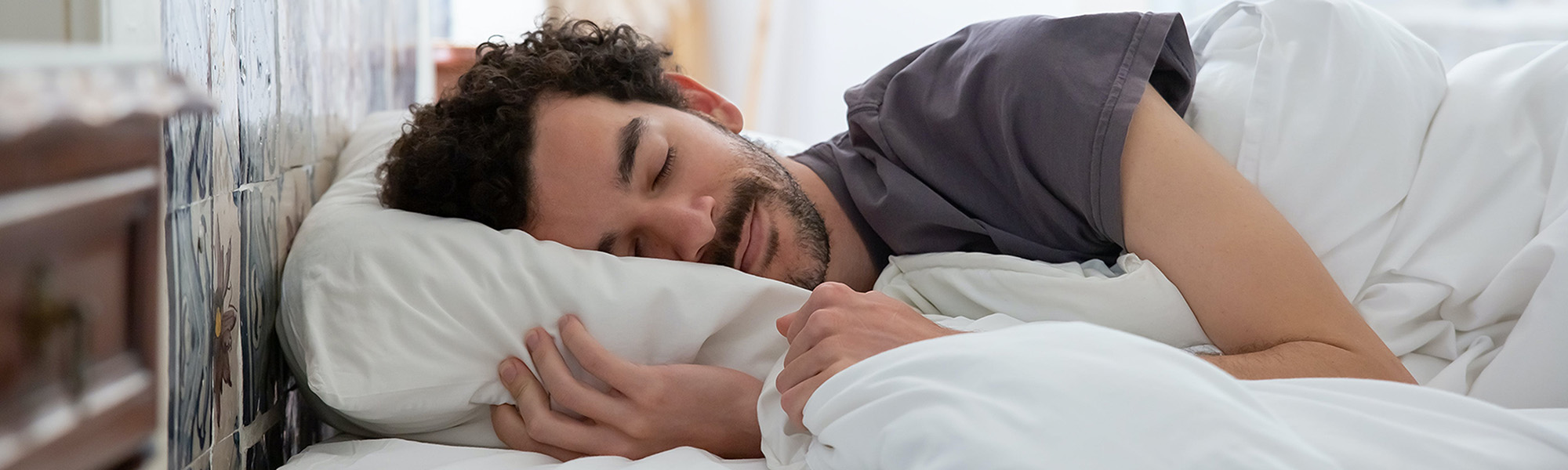
Did you know November is recognized as National Sleep Comfort Month? Neither did I! But it’s the perfect opportunity to take a deep dive into how homeowners can leverage their HVAC systems for a better night’s rest.
The importance of a good night’s rest
Most of us have witnessed the benefits of a good night’s sleep firsthand. Sleep quality has an invaluable influence on our lives and health. It directly affects our mood, attitude, productivity, and performance. Inadequate sleep is linked to several health issues, including heart disease, kidney disease, high blood pressure, diabetes, stroke, obesity, and depression.
Dr. Marishka Brown, a sleep expert at the National Institute of Health, says quality sleep encompasses three major components: “One is how much sleep you get. Another is sleep quality—that you get uninterrupted and refreshing sleep. The last is a consistent sleep schedule.”
Let’s explore how your HVAC system can help set your sleep cycle in motion, reduce the amount of tossing and turning during the night, and start your day feeling rested and ready.
Putting Your Thermostat to Work
Kickstarting your sleep
According to the Sleep Doctor at Sleepdoctor.com, sleep follows your core body temperature rhythm. Your core body temperature naturally rises throughout the day hitting its peak in late evening. Shortly after peaking, your core temperature will begin cooling off. This sends a signal to your brain to begin releasing melatonin.
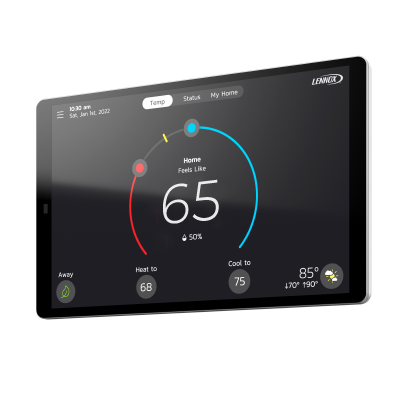
Using a smart or programmable thermostat, leverage set-it-and-forget-it thermostat schedules to automatically set your sleep cycle in motion. Set your thermostat schedule to cool down about an hour before you plan to go to bed. As mentioned earlier, cooling down will naturally kickstart your body’s sleep cycle and allow you fall asleep faster.
Optimal sleep temperature
The National Sleep Foundation states that for most adults, a temperature range between 60 to 67 degrees appears to be the ideal range for high-quality sleep. It’s worth noting that children and older adults typically sleep best at a slightly higher temperature range compared to adults. For children and older individuals, a range between 65-70 degrees Fahrenheit is recommended.
Rise and shine
For many of us, waking up in the morning can be tough enough. Add a cold room and the warm embrace of a comforter into the mix and it can seem impossible to spring out of bed! To counteract this, set your thermostat to begin rising about 20 – 30 minutes before your alarm is set to go off. By prewarming your bedroom right before you wake, you can start your day in the best way possible.
Dialing in your best night’s sleep
Keep in mind that the Goldy Locks Principle applies to optimizing your sleep temperature. Everyone is different and some fine-tuning of your t-stat schedules may be required. A little too hot and your brain will wake you up to remove blankets to cool down. Too cold and your body will naturally trigger mechanisms which will also wake you up. Find which temperatures and schedules are just right for you.
Improve sleep with a zoned system
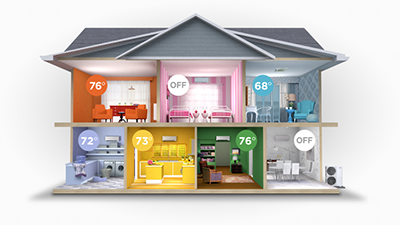
Having a zoned system can work wonders for improving your comfort in different areas of your home. This is especially true for two-story homes where air might struggle to adequately heat or cool areas like bedrooms. A zoned system works by using automated dampers that open or close to regulate the amount of warm or cool air that goes into each zone.
When one zone needs heating or cooling, that zone’s damper opens to deliver air to that area/zone and the other zone’s damper closes to restrict airflow. If you have a pesky upstairs bedroom that struggles to reach your desired temperature before your equipment shuts off, adding zones can be a game changer for a good night’s sleep. Click here for more information on zoned HVAC systems.
Add a ductless mini-split
Ductless mini-split systems also incorporate zoning technology but without the need for dampers or ductwork. If you are looking to solve one problematic bedroom, consider investing in a single-head or zoned unit for that room. A ductless unit will give you the most precise control over your bedroom temperature.
Mitsubishi Electric’s M-Series mini-splits are quiet and precise—select indoor units run as low as ~19 dB(A) on low fan, with Sleep and Dry modes that keep the room comfortable without over-cooling. For Wisconsin winters, choose Hyper-Heating H2i models so the bedroom stays warm well below freezing. Use the Kumo cloud app to pre-condition the room 30–60 minutes before lights out and tweak setpoints from bed; the optional 3D i-see Sensor helps optimize airflow once you’re settled in.
Indoor Air Quality
Combat low humidity during winter with a whole-home humidifier
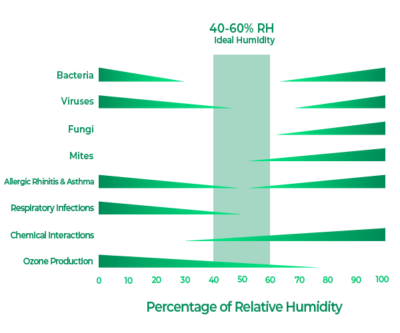
Humidity levels play a vital role in the quality of your sleep. According to AprilAire, an industry leader in indoor air quality, the optimal humidity range in our homes is between 40% – 60% relative humidity (RH). When our indoor air falls below 40% RH, it causes our mucus membranes and nasal passages to dry out. This not only reduces comfort during resting hours but also exacerbates our propensity for snoring. Snoring impacts both your partner’s sleep quality and your own.
The best way to keep your home within the optimal humidity range in the dry winter months is with a whole-home humidifier. Rather than treating one room at a time with small, portable humidifiers, consider a whole-home solution that integrates into your HVAC system to deliver ideal humidity levels to every room in your home.
Tackle high humidity in the summer with whole-home dehumidification
Summer brings the opposite humidity problem. When indoor humidity climbs above ~60% RH, the air feels sticky, sleep surfaces hold moisture, and allergens like dust mites thrive. None of these byproducts of high humidity help you get a restful nigh sleep.
Aim to keep bedrooms between 40–60% RH in summer by letting your AC run longer, using “dry”/dehumidify modes where available. If you really want to end high humidity struggles during the summer, look no further than an Aprilaire Whole-home Dehumidifier. Unlike the small portable units you see in big box stores, a whole-home humidifier quietly pulls moisture from the entire house, lets you set a target humidity (e.g., 50% RH), and keeps it there. One AprilAire whole-home humidifier does the work of about 5 portable units, and uses only a fraction of the energy.
Air circulation and filtration
Whether you opt to use your ceiling fan, your thermostat’s fan setting/mode, or both, having plenty of air circulation lends itself well to a good night’s sleep. Circulating the air helps prevent your bedroom’s air from becoming stale.
By setting your thermostat fan to ‘on’ or ‘circulate,’ air will be pulled through your HVAC filter more often. This will reduce the amount of respiratory and allergy triggers in the air helping you breathe easily while you sleep. The white noise produced by ceiling fans and your HVAC system’s fan is also conducive to sleep.
Conclusion
On the journey towards better sleep, your HVAC system can emerge as an unexpected hero. By harnessing the power of temperature control and enhancing your indoor air quality, you can find your best night’s sleep yet!
Read more blog posts from Kettle Moraine Heating & AC.
About the Author
Josh Walejewski
Josh is a professional marketer who has worked in the HVAC industry since 2017. With a Bachelor of Applied Arts and Sciences Degree (B.A.A.S) in marketing and sustainable business management from the University of Wisconsin, he has a passion for all aspects of HVAC, business, marketing, and environmental stewardship.