


April 2026
By: Josh Walejewski
Read Time: 3-4 Minutes
Spring allergy season gets blamed for a lot, but outdoor pollen is not always the whole story. If your sneezing, congestion, itchy eyes, or scratchy throat seem to ramp up once you are inside, your home may be holding onto allergy triggers instead of helping you escape them.
Per the American Lung Association, Americans spend about 90% of their time indoors, and indoor pollutant levels can be 2-5 times more polluted than outdoor air.
Your Home Can Trap More Than Just Heat and Humidity
Your home quietly collects and recirculates allergens every day. Dust settles into carpet, furniture, and bedding. Pet allergens cling to fabrics. Pollen gets tracked in on shoes, clothing, and pets.
According to the EPA, dust mites, pollen, pet allergens, and mold are among the most common indoor biological contaminants that trigger allergy and asthma symptoms.
Common Reasons Allergies Feel Worse Indoors
Dust mites
Dust mites are one of the most common indoor allergy triggers. People with dust mite allergies are reacting to proteins found in dust mite feces, urine, and decaying body particles, not to the live mites themselves.
Dust mites thrive in places like bedding, upholstered furniture, carpet, and other soft materials, and they do especially well in humid environments.

Pet allergens
While our furry friends are more like family than pets, they can still be a source of allergy triggers. It is not really the fur that causes the issue. Pet allergens are typically found in dander, saliva, and urine, and those particles can settle into furniture, flooring, and dust. Once they are in the home, they can stick around far longer than most homeowners realize.
Pollen
A lot of people assume pollen stays outside. It does not. It gets carried in through open doors, windows, shoes, clothes, and pets, then settles into your home where it can continue bothering you long after you came inside.
Low-efficiency HVAC filtration
A basic filter may catch larger debris, but smaller airborne particles can still pass through. EPA guidance recommends using a MERV 13 filter, or the highest-rated filter your system can handle, because higher-rated filters are better at capturing smaller particles.
Dirty filters
Even a decent filter stops helping much when it is overloaded. EPA guidance notes that if a filter is dirty and overloaded, it will not work well. A clogged filter can also reduce airflow, which is bad for both air quality and system performance.
Humidity that is too high
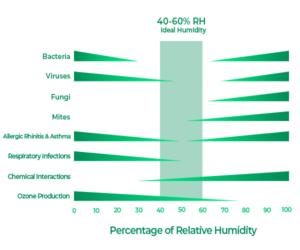
When humidity gets too high, it creates a better environment for mold and dust mites. EPA guidance recommends keeping indoor humidity between 30% and 60%.
Humidity that is too low
Dry indoor air can irritate the inside of your nose and throat and make your eyes feel itchy. That irritation can make allergy symptoms feel even more miserable, especially during the heating season. Mayo Clinic and AAAAI both note that low humidity can dry and irritate sinus passages, even though too much humidity creates its own problems.
Mold or microbial growth in damp HVAC areas
Moisture around evaporator coils, drain pans, basements, crawl spaces, or other damp areas can support mold growth. If moisture is present, the real fix starts with controlling the moisture source, not just trying to clean the air after the fact.
What actually helps manage indoor allergy triggers?
The honest answer is that there usually is not one magic fix. The best results usually come from stacking the basics in the right order: control the source, manage moisture, improve filtration, and then consider add-ons where they make sense.
Source control is the most effective solution for most indoor air quality problems, with ventilation and filtration serving as important supporting strategies.
DIY Source Control:
Controlling Dust Mite Allergens
- Covering your mattress, comforter, and pillows with dust mite-resistant cases or using bedding products that have anti-microbial properties
- Opening the curtains and airing your bedding in the sunshine
- Washing sheets and pillowcases weekly in water hotter than 130°F
Controlling Pet Dander Allergens
- Groom pets regularly outside to help reduce dander inside
- Create dedicated pet free safe zones such as bedrooms to help with getting quality sleep
- Keep pets out of carpeted rooms to reduce dander buildup
Controlling Pollen Allergens
- Keep windows and doors shut during peak seasons
- Shower at night to help keep pollen out of your bedding
- Take shoes off outside to avoid tracking pollen
Allergy Relief with Indoor Air Quality Products
Upgrade your filter cabinet so your system can use a better filter
Think of your HVAC filter like a fishing net. A cheap, wide net lets a lot slip through. A better one catches more, but only if your system can still pull air through it properly.
That is where MERV rating comes in. MERV stands for Minimum Efficiency Reporting Value. It is a rating that tells you how effective a filter is at capturing particles of different sizes. In general, the higher the MERV rating, the better the filter is at trapping smaller particles and allergy triggers.
Click here for more on MERV ratings and choosing the right filter.
If your current setup only accepts a thin, low-efficiency filter, upgrading the filter cabinet may allow for a deeper media filter that captures more particles without creating the same problems a poor filter match can cause.
Keep humidity in the sweet spot
Whole-home humidity control can help keep your house from getting too damp in summer and too dry in winter. The target range is usually 30% to 60% relative humidity. Too high, and you give mold and dust mites a better place to thrive. Too low, and your nose, throat, skin, and eyes can start feeling like sandpaper and make your allergy symptoms feel even worse.
A whole-home humidifier or dehumidification strategy works through the HVAC system to treat the air moving through the house, rather than just one room at a time. That can be a much better long-term solution than constantly chasing relief with portable units.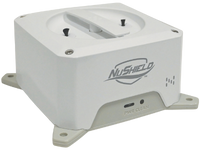
Consider an ionizer such as the Nushield-R
The NuShield-R is an advanced needlepoint bipolar ionization generator designed for HVAC systems that helps reduce allergy triggers, such as pollen, pet dander, and dust.
It is designed to improve indoor air quality by injecting positive and negative ions into your home’s air steam causing airborne particles to clump together, allowing them to be more easily captured by the existing filter in your heating and cooling system.
Use germicidal lights for the right job
UV-C germicidal lights make the most sense near damp HVAC components like the evaporator coil and drain pan. In those locations, they can help reduce microbial growth on wet surfaces and may help with musty odors and buildup in the area.
The Bottom Line
Your HVAC system does more than heat and cool your home. It also plays a major role in how air moves, what gets filtered, and how comfortable your home feels to breathe in. In that sense, it really is a lot like your home’s lungs.
So if your allergies seem worse indoors, the first question to ask is, “What in my home is feeding the problem?”. Once you identify the source, it becomes much easier to choose the right solution. Better filtration, balanced humidity, clean filters, moisture control, and the right supplemental tools can make a real difference.
Read more blog posts from Kettle Moraine Heating & AC.
About the Author
Josh Walejewski
Josh is a professional marketer who has worked in the HVAC industry since 2017. With a Bachelor of Applied Arts and Sciences Degree (B.A.A.S) in marketing and sustainable business management from the University of Wisconsin, he has a passion for all aspects of HVAC, business, marketing, and environmental stewardship.