
June 2026
By: Josh Walejewski
Read Time: 3 Minutes
Some home advice sounds suspiciously outdated, like old household folklore from an uncle who still believes swallowed gum stays in your stomach for seven years.
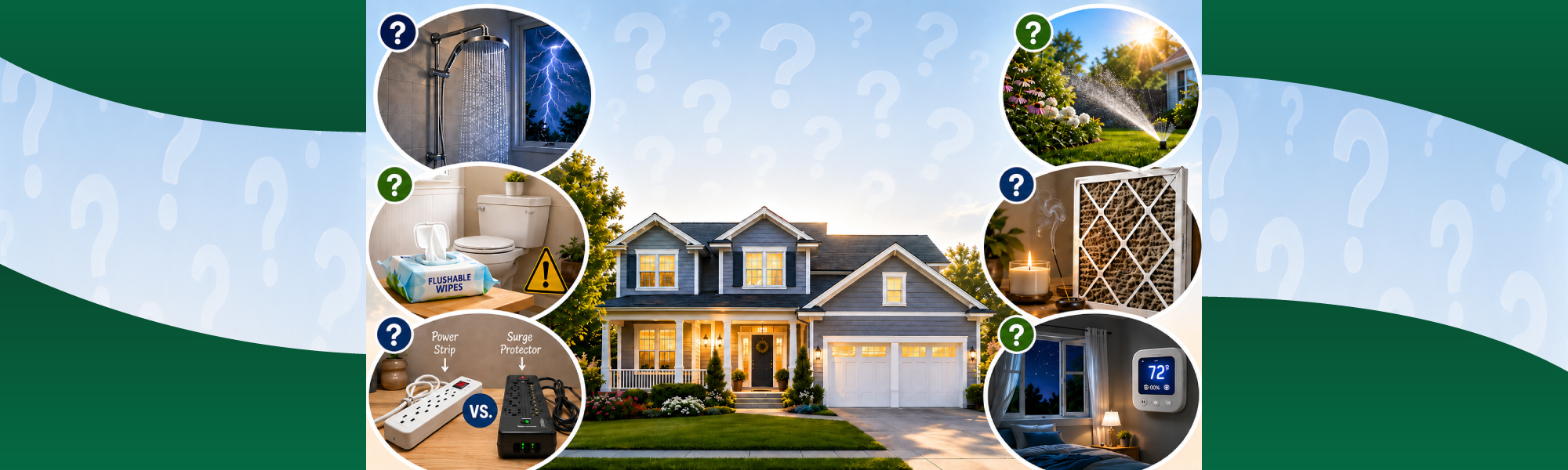
You know the kind: don’t shower during a thunderstorm, don’t water plants when the sun is out, “flushable” wipes are fine to flush, and that thing plugged into the wall is definitely a surge protector because, well, it has a lot of outlets.
A lot of these sound like household fiction, but some of them are very real. Others are a little misunderstood. And a few are just weird enough that most homeowners have wondered about them at least once.
So let’s answer a few common home questions people are often afraid to ask.
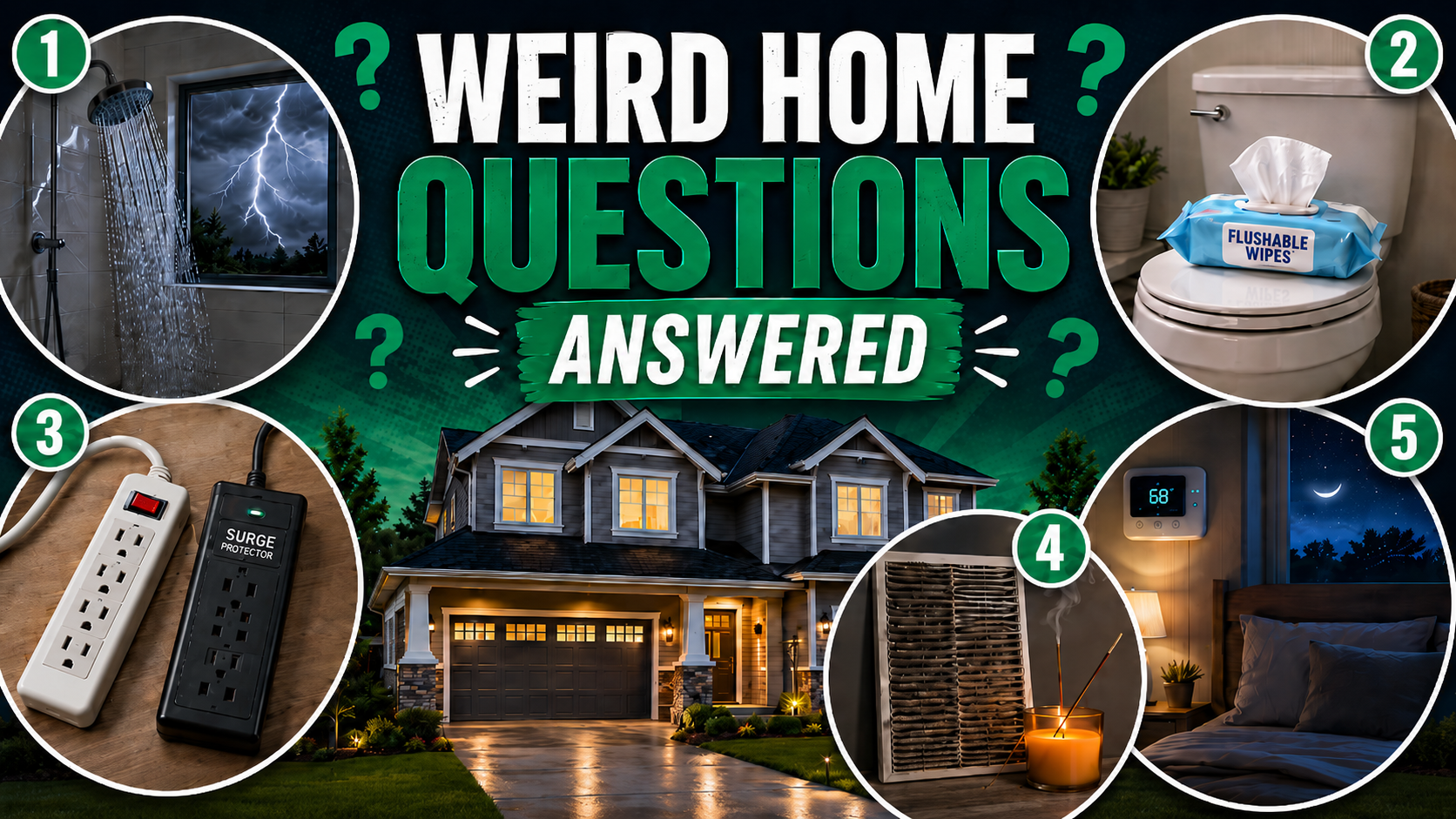
1. Can You Really Get Electrocuted If You Shower During a Storm?
This is a fact. This one sounds dramatic, but it is based on real lightning safety guidance. During a thunderstorm, if lightning strikes your house, it can travel through plumbing, wiring, and other conductive paths. That is why safety experts recommend avoiding showers, baths, washing dishes, and even washing your hands while lightning is nearby.
Does that mean your shower turns into a lightning rod every time it storms? No. But if you can hear thunder, the safest move is to wait until the storm has passed.
2. Is It Really a Good Idea to Use a Garbage Disposal If You Have a Septic System?
Generally, it is better to avoid it or use it very sparingly if your home has a septic system. A garbage disposal may seem like a convenient way to get rid of food scraps, but if your home has a septic system, that food waste does not magically disappear. It ends up in your septic tank.
Food waste can add extra solids, grease, and sludge to the system. Over time, that can make your tank fill faster, increase how often it needs to be pumped, and potentially contribute to drain or leach field issues.
That does not mean every septic system with a garbage disposal is doomed. But it does mean the disposal should not be treated like a second trash can.
What to Do Instead:
Scrape plates into the garbage or compost when appropriate. Avoid putting grease, coffee grounds, eggshells, pasta, rice, fibrous foods, and food waste down the drain.
Your septic system has a job. It does not need leftovers.
3. If a Wipe’s Packaging Says “Flushable,” Is It Safe to Flush?
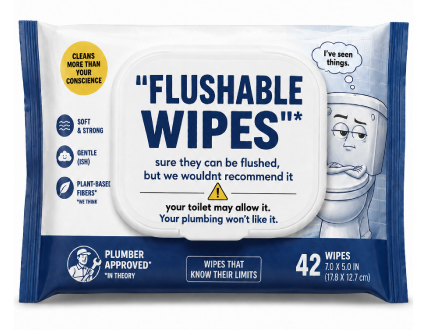 Don’t flush them. The label may say “flushable,” but your plumbing will disagree. The word “flushable” is doing a lot of suspicious work here.
Many wipes can technically go down the toilet, but that does not mean they break down like toilet paper. Toilet paper is designed to fall apart quickly in water. Wipes are designed to stay together while being used, which is exactly what makes them a problem inside pipes, sewer lines, pumps, and septic systems.
Flushable wipes can contribute to clogs, backups, and expensive plumbing problems. They may leave your toilet bowl, but that does not mean they safely leave your plumbing system.
What to Do Instead:
Only flush human waste and toilet paper. Wipes, even the ones labeled “flushable,” belong in the trash.
A good rule of thumb: if it is not toilet paper, your toilet does not want it.
4. Power Strips and Surge Protectors Are the Same Thing, Right?
No. They are not the same thing. A power strip gives you more places to plug things in. A surge protector is designed to protect electronics from voltage spikes. But we all know someone, or maybe ourselves, who defaults to calling it a “surge protector” even if we’re talking about an ordinary power strip.
Some power strips have built-in surge protection. Some do not. The only way to know is to look at the label and product details. If it does not specifically say it provides surge protection, assume it is just a regular power strip.
This matters because plugging your computer, TV, router, gaming system, or other sensitive electronics into a basic power strip provides zero protection against electrical surges.
Also worth noting: neither a power strip nor a surge protector gives your circuit more capacity. If too much is plugged into one outlet or circuit, you can still overload the circuit.
What to Do Instead:
Use true surge protectors for sensitive electronics, avoid daisy-chaining power strips, and never use power strips as a permanent fix for not having enough outlets.
More outlets on a strip does not mean more power in the wall. It just means more ways to get into trouble.
5. Does Watering the Lawn or Garden During Peak Sun Burn the Plants?
No. Water droplets are not little magnifying glasses frying your plants. This is one of those myths that refuses to go away.
Watering in the middle of the day is not ideal because more water can evaporate before it soaks into the soil. But the idea that water droplets will scorch your lawn or plants simply because the sun is out is a myth.
If your plants are stressed and thirsty, watering them is better than letting them continue to struggle just because it is noon.
What to Do Instead:
Water early in the morning when possible. That gives the soil time to absorb moisture before the hottest part of the day. But if your plants are wilting badly during the afternoon, give them water.
A thirsty plant does not care what time the internet said it is allowed to drink.
6. Does Burning Candles or Incense Wreak Havoc on Your HVAC Filter?
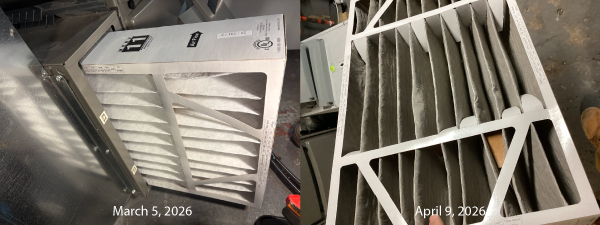
This one is true, and we have pictures to back it up. Candles and incense may smell nice, but they also release tiny particles into your indoor air. Your HVAC filter’s job is to catch airborne particles, so heavy candle or incense use can cause filters to darken or clog a lot faster than normal.
This is especially noticeable with frequent candle burning, incense, fireplaces, or other sources of soot and fine particles. In some homes, a filter can look dirty much sooner than expected, not because the filter is bad, but because it is catching what is floating through the air.
We recently saw a filter that looked filthy less than a month after being changed. The cause? Daily incense burning. These pictures say it all. The first image shows the new filter installed on March 5, 2026. The second picture was taken on April 9, 2026.
What to Do Instead:
Check your filter more often if you burn candles or incense regularly. Trim candle wicks, avoid burning candles near supply or return vents, and make sure your home has proper ventilation.
7. Should You Run Your AC Overnight If It Drops Below 60°F Outside?
Usually, it is better to turn the AC off and use the cool outdoor air instead. This is a very Wisconsin problem.
Early summer can be weird. It might be 84 degrees during the day, then drop into the 50s overnight. The upstairs bedrooms still feel warm at bedtime, so it is tempting to leave the AC running all night or even bump the thermostat down to get some better sleep.
But many standard residential air conditioners are not designed to run in cooling mode when outdoor temperatures get too low unless they have special low-ambient controls. When the outdoor temperature drops into the 50s, the system may not operate the way it is intended to.
That does not mean your AC instantly breaks the second it hits 59 degrees outside. But if it is cooler outside than inside, the smarter move is to shut the AC off, open a few windows, and let the outdoor air do the work for free.
What to Do Instead:
When the outdoor temperature drops into the 50s or low 60s, consider turning the AC off and opening windows if humidity, allergies, security, road noise, and outdoor air quality are not concerns.
Basically, let Wisconsin be your AC overnight, then close the house back up before Wisconsin changes its mind and temperatures start rising.
The Bottom Line
Homes are full of weird little rules, half-truths, and “I heard this once” advice. Some are myths. Some are real safety concerns. Some depend on your home’s plumbing, electrical system, HVAC equipment, or setup.
The good news? You do not need to know everything. You just need to know when a small habit could lead to a bigger problem. When something in your home feels off, smells weird, keeps tripping, keeps clogging, or stops making sense, that is usually your home trying to get your attention.
If your home is giving you one of those “is this normal?” moments, our team can help you figure out what is actually going on.
Read more blog posts from Kettle Moraine Heating & AC.
About the Author
Josh Walejewski
Josh is a professional marketer who has worked in the HVAC industry since 2017. With a Bachelor of Applied Arts and Sciences Degree (B.A.A.S) in marketing and sustainable business management from the University of Wisconsin, he has a passion for all aspects of HVAC, business, marketing, and environmental stewardship.