

July 2026
By: Josh Walejewski
Read Time: 3-4 Minutes
Your old air conditioner quits on a hot July day. You call a local contractor for an estimate to replace it. After evaluating your AC system, the technician starts talking about your furnace, too.
Cue the suspicious homeowner face 🤨.
“Wait a second. I called a technician out because the AC was broken. Why are we suddenly talking about my furnace too?”
Fair question.
At first, it can feel like someone is trying to turn one problem into two. And honestly, that concern is understandable. But in many homes, your air conditioner and furnace are more connected than they seem. They do different jobs, but they work together as part of the same comfort system. That means when one major piece of equipment is being replaced, it can be smart to evaluate the other.
Let’s break down why contractors sometimes recommend or provide estimates for both systems, even when only one of them is currently broken.
Your AC and Furnace Have Different Jobs, But They Work Together
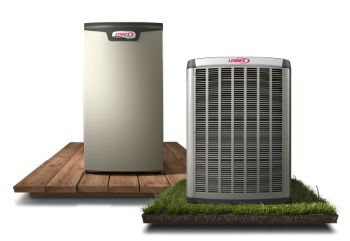 Most homeowners think of the AC and furnace as two totally separate machines.
The AC cools. The furnace heats. Simple enough. But in many Wisconsin homes with a traditional forced-air system, the air conditioner and furnace share important parts of the same comfort setup.
Your outdoor AC unit does not cool your home all by itself. It works with an indoor coil, refrigerant lines, electrical components, thermostat controls, ductwork, and the furnace’s blower that moves air through your home.
So even if your furnace is not heating anything in July, its blower is essential to move that cool, comfortable air your air conditioner creates throughout your entire home.
That is why your furnace may come up during an AC replacement conversation. Not because they want to charge you more. It is because the two systems are connected in how they operate, how they are installed, and how much they can cost to replace over time.
Are the Furnace and AC the Same Age?
Here is where age matters.
If your AC and furnace were installed at the same time, they have been through the same years, the same dust, the same airflow demands, the same thermostat debates, and the same Wisconsin weather.
So if one system is at the end of its life, the other may not be far behind.
That doesn’t mean the other system is guaranteed to fail next week, next month, or even next year. HVAC equipment does not come with a crystal ball, even though we wish it did.
But if your AC is 20 years old and your furnace is also 20 years old, it is fair to ask:
“Do I want to invest in half of an aging system, or should I compare the cost of replacing both while the installation work is already happening?”
This is especially important if the other system has already needed repairs, has comfort issues, or is inefficient.
A good contractor should not pressure you. But they should help you understand the full picture before you spend thousands of dollars.
One Installation Can Be More Efficient Than Two Separate Projects
Replacing an AC and furnace at the same time can often reduce duplicated work. When systems are replaced separately, some parts of the job happen twice.
One estimate now for the AC replacement.
Another estimate later for the furnace.
One installation day now.
Another installation day later.
One financing decision now.
Another financing decision later.
One round of scheduling, setup, labor, cleanup, paperwork, and disruption now.
Then again later.
When both systems are replaced together, the project can often be handled as a single coordinated installation instead of two separate jobs.
That can mean:
- One installation window
- One crew visit
- One project setup
- One financing plan
- One thermostat or control setup
- One cleanup
- One long-term comfort plan
It is a little like remodeling a kitchen and deciding whether to replace the countertop now but leave the old cabinets for “maybe next year.” HVAC is similar.
Matching HVAC Equipment Can Help With Comfort and Performance
Your home comfort system is not just a furnace sitting in the basement and an AC unit sitting outside. It is a complete system working in tandem.
For example, many newer air conditioners are built with multi-stage cooling and better humidity-control features. But if the new AC is paired with an older single-stage furnace or blower, the system may not be able to fully take advantage of those features. The AC may still cool the home, but airflow, noise, humidity removal, and overall comfort can be limited by the older equipment it is connected to.
Replacing both the AC and furnace together can make it easier to design the setup as one complete comfort solution instead of attaching a new piece of equipment to an older system that may already be nearing retirement.
Financing and Budget Planning Can Be Simpler
Most homeowners are trying to balance comfort, budget, timing, and “How much longer can we limp this thing along?”
When both systems are aging, it may be easier to review one complete project with one financing plan rather than replacing the AC now and then dealing with the furnace later as a separate expense.
That matters because the second replacement may not happen at a convenient time.
Your AC usually does not wait for a mild 76-degree day to fail. Your furnace does not tend to pick a calm Tuesday in October. Equipment loves drama. ACs fail during heat waves. Furnaces fail during cold snaps. That is when demand is high, schedules are tighter, and comfort becomes urgent.
If both systems are already near the end of their useful life, replacing them together can turn a reactive emergency into a planned upgrade. That is not always the cheapest decision today, but it may be the better value over the next several years.
I’ve been in the HVAC industry for nearly ten years. I wish I could say equipment has become more affordable over time. In reality, replacement costs rarely seem to move in the homeowner’s favorite direction. In many cases, waiting does not make replacement cheaper.
Avoiding a Future Emergency Has Value Too
A broken AC in July or a failed furnace in January can mean uncomfortable rooms, rushed decisions, emergency scheduling, after-hours concerns, and limited time to compare options. Nobody makes their best financial decisions while sweating in the living room or wearing a winter coat indoors.
If one system has already failed and the other system is the same age, replacing both can reduce the chance of going through the same stressful process again later, just during a different season.
Does This Mean You Always Need to Replace Both?
No. And this part is important.
You do not automatically need a new furnace just because your AC failed. You do not automatically need a new AC just because your furnace failed.
Replacing only one system may make sense if:
- The other system has meaningful life left
- The other system is in good condition
- The equipment is compatible
- The system is properly sized
- Your comfort has been good
- Repair history has been minimal
- Replacing both does not fit your budget right now
A good contractor should be able to explain both options clearly. They should show you the cost of replacing one system, the cost of replacing both, and the pros and cons of each path.
The goal is not to sell you two major pieces of equipment. The goal is to help you avoid making a short-term decision that creates a more expensive long-term problem.
Questions to Ask Before Replacing Only One System
If your contractor recommends looking at both systems, here are a few smart questions to ask:

- How old is my AC?
- How old is my furnace?
- Has the other system needed recent repairs?
- Is the existing equipment compatible with the new system?
- Will the older system limit comfort, airflow, or efficiency?
- What would it cost to replace one system now and the other later?
- Can I take advantage of additional savings if both are replaced?
- How long do I plan to stay in the home?
Those questions help move the conversation away from “Do I have to buy both?” and toward “Which option makes the most sense for my home?” That is a much better conversation.
The Bottom Line
If your AC or furnace is nearing the end, it is worth comparing your options side by side. Sometimes replacing one system is the smart move. Sometimes replacing both gives you better long-term value, better compatibility, fewer disruptions, and one complete comfort plan.
Either way, you deserve a clear explanation, honest recommendations, and a plan that makes sense for your home, your budget, and your comfort.
Read more blog posts from Kettle Moraine Heating & AC.
About the Author
Josh Walejewski
Josh is a professional marketer who has worked in the HVAC industry since 2017. With a Bachelor of Applied Arts and Sciences Degree (B.A.A.S) in marketing and sustainable business management from the University of Wisconsin, he has a passion for all aspects of HVAC, business, marketing, and environmental stewardship.