
June 2026
By: Josh Walejewski
Read Time: 3 Minutes
Cost Factors, Timelines, and What Business Owners & Facilities Managers Should Know About Rooftop Unit Installation
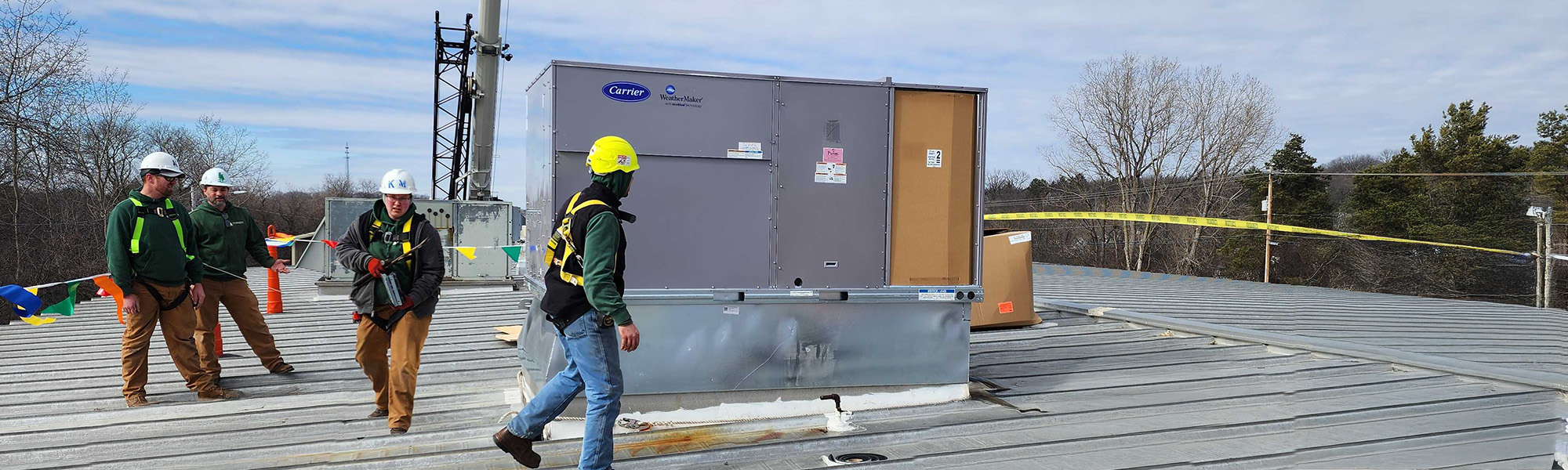
A commercial rooftop unit installation or replacement is not like swapping out a furnace in a home. There may be crane access, curb adapters, electrical requirements, ductwork changes, controls, permits, scheduling around business hours, and downtime planning.
For Wisconsin businesses, the right rooftop unit installation can improve comfort, reduce emergency repairs, and help avoid rushed decisions when an old unit finally gives up during peak season.
Let’s uncover exactly what business owners and facilities managers need to know to make a rooftop unit replacement as seamless and stress-free as possible.
What Is a Commercial Rooftop Unit?
A rooftop unit (RTU) is a self-contained, all-in-one HVAC system that houses the compressor, condenser, evaporator coil, and blower fan in a single cabinet installed on the roof of a building. RTU’s can provide heating and cooling for a single zone or an entire building that utilizes multiple zones.
You’ll notice them on the roof tops of:
- Retail stores
- Offices Restaurants
- Warehouses
- Churches
- Medical offices
- Multi-tenant buildings
- Light industrial building
- Factories
When Should a Business Consider Installing or Replacing an RTU?

- The current unit is 10 to 15+ years old
- Repairs are becoming more frequent
- Tenants, employees, or customers are complaining about comfort
- Utility costs keep climbing
- Parts are getting harder to source
- The building layout or usage has changed
- The current system is oversized, undersized, or poorly controlled
- You are remodeling, expanding, or changing occupancy
What Impacts Commercial Rooftop Unit Installation Cost?
Why Proper Rooftop Unit Sizing Matters
A larger rooftop unit is not automatically a better rooftop unit. If the system is oversized, it may short cycle, waste energy, create humidity issues, or fail to deliver consistent comfort. If it is undersized, it may run constantly and still fall behind during Wisconsin’s hottest or coldest days. A proper commercial load evaluation helps match the equipment to the building, not just the square footage.
What Happens During a Commercial Rooftop Unit Installation?
- Site visit and existing equipment review
- Load evaluation and system recommendation
- Quote review and scope confirmation
- Equipment ordering and project scheduling
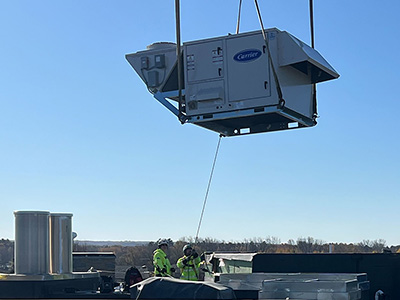
- Crane/access planning if needed
- Removal of old equipment
- New RTU set in place
- Electrical, gas, curb, duct, and control connections
- Startup, testing, and adjustments
- Maintenance planning after installation
How Long Does Rooftop Unit Installation Take?
A simple like-for-like rooftop unit replacement may be completed much faster than a more complex project involving curb adapters, ductwork changes, electrical upgrades, controls, or multiple units. The safest answer is that the timeline depends on equipment availability, site access, project complexity, and whether the work needs to happen during business hours, after hours, or in phases.
Should You Replace One RTU or Multiple Units at Once?
It’s typically best to prioritize the worst-performing units. However, if other units were installed at the same time as those failing, you can save on overall cost as one crane coordination can get multiple RTU’s up on the roof in one visit instead of having to get a crane out again if another unit fails shortly later.
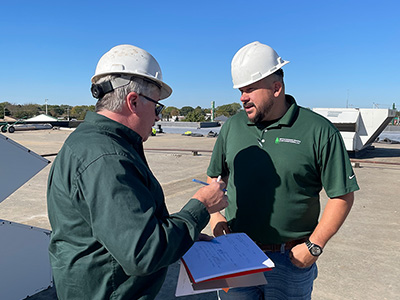
What Should Business Owners Ask Before Choosing a Contractor for a Rooftop Unit Installation?
Before committing to a installing contractor, it’s important to ensure they are the right fit.
We’ve put together a quick list of important questions to ask as you are vetting potential contractors to work with:
Will you inspect the existing curb, ductwork, electrical, gas, and controls?
Will you perform or review a load calculation?
Can you coordinate crane access?
Can the work be scheduled to reduce business disruption?
Will you handle startup and testing?
Will you document what was installed?
Can you maintain the equipment after installation?
Who is my point of contact during the project?
Why Wisconsin Businesses Should Plan RTU Replacement Before Peak Season
Hot, humid Wisconsin summers put heavy demand on commercial HVAC systems. When temperatures climb, more businesses need service, repairs, and replacement work at the same time. That can mean longer wait times, tighter scheduling, and fewer options if your rooftop unit fails when everyone else is calling too.
The same problem happens in winter. During a cold snap, older equipment is more likely to break down, demand for emergency service rises, and replacement decisions can become rushed.
That is why spring and fall are often better windows to plan a commercial rooftop unit replacement. The weather is usually less extreme, which gives you more time to review options, compare recommendations, and make a smarter long-term decision instead of reacting to an emergency.
Downtime also hits harder during peak seasons. If your building loses heating or cooling during extreme weather, it can affect customers, employees, tenants, inventory, and daily operations. The worst time to shop for a rooftop unit is usually the day your old one quits. At that point, the decision becomes less about choosing the best system for your building and more about getting something available as fast as possible.
Commercial Rooftop Unit Installation in Southeastern Wisconsin
Kettle Moraine Heating & Air Conditioning installs and replaces commercial rooftop units for businesses throughout Southeastern Wisconsin, including commercial buildings in and around Milwaukee, Madison, Waukesha, Jefferson, Ozaukee, West Bend, Lake Geneva, and surrounding communities.