


November 2026
By: Josh Walejewski
Read Time: 3-4 Minutes
There’s a lot to love about Thanksgiving in Wisconsin. A kitchen that smells like roasted turkey, a full lineup of football, and at least one family member who insists that they’re “just resting their eyes” after believing they had room for seconds.
But while you’re busy serving a house full of guests, your home has a little extra work on its plate, too. More cooking, more showers, more dishes, and more trips to the bathroom can put your everyday routines to the test.
Fortunately, a little preparation goes a long way. Here are a few ways to keep everyone comfortable and help prevent HVAC, plumbing, or electrical mishaps from stealing the spotlight.
Keep the Turkey Roasting, Not Your Guests
Between the oven, stove top, and extra people, your home may get stuffy fast and warm up more than you expect. Before turning up the thermostat to make things cozy, give that extra activity a chance to do some of the work.
How much heat are we talking about? Let’s do a little Thanksgiving math.
Below is an example of a busy cooking hour. The appliance figures use assumed average energy consumption, so your results will vary with equipment, settings, and cooking habits.
| What’s contributing? | Example calculation | Approximate BTU/hr |
| 12 guests + 2 hosts | 14 people give off about 400 BTU/hr each | 5,600 |
| Electric oven | A 3,000-watt heating element | 6000 |
| 3 electric stove top burners | 2,000 watts as you boil, sauté, & simmer | 7,000 |
| 2 slow cookers | Averaging a combined 400 watts | 1,400 |
| The TV showing the game | Averaging 200 watts | 700 |
That’s roughly 21,000 BTU/hr of body heat and appliance energy in this example.
Now, that doesn’t mean you’ve added a 21,000-BTU heater to your living room/kitchen, but it does put into perspective why Thanksgiving gatherings can feel so stuffy. I guess Grandma really didn’t have the thermostat cranked to 78.
The practical takeaway? Lower your thermostat a 2-4 degrees before guests arrive. Adjust as needed, and keep using your kitchen exhaust while cooking to help remove moisture, heat output, and cooking pollutants.
Check your thermostat schedule, too. A temporary hold can keep your normal routine from interrupting Thanksgiving dinner. Resume your usual schedule afterward.
The turkey needs to reach roasting temperature. Your guests don’t.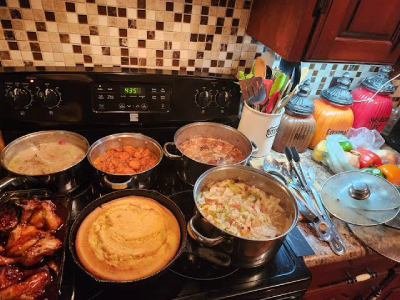
One more quick check: Take a look at your furnace filter. If it’s due for replacement, handle it before the holiday rush. Use the size and type recommended for your system.
And if you’re rearranging furniture to squeeze in another table, keep supply vents and return grilles unobstructed. A couch pushed over a register or a stack of coats covering a return can interfere with airflow.
Clear the Air Between Courses
The smell of Thanksgiving dinner is part of the experience. A house full of lingering smoke and excess moisture? Less appetizing.
Use your kitchen exhaust fan while cooking, especially if it vents outdoors. An outdoor-vented hood helps remove cooking pollutants and moisture at the source. A recirculating hood filters and returns air to the kitchen, so it doesn’t provide the same ventilation benefit.
Your thermostat’s “On” or “Circulate” fan setting can help move air between rooms, but there’s a distinction: moving indoor air around isn’t the same as bringing fresh air inside.
Keep an eye on humidity as well. Wisconsin’s heating season can bring dry indoor air, but cooking and extra showers add moisture. If you notice condensation collecting on windows, be sure your guests are running the bathroom exhaust fan while showering.
If your home has a whole-home humidifier, you may want to dial it back preemptively before Thanksgiving activities begin.
Give Your Water Heater a Fighting Chance
Overnight guests can turn an ordinary morning into a surprisingly competitive shower schedule.
If you have a tank-style water heater, back-to-back showers may use stored hot water faster than the heater can replace it. Stagger showers when possible and save laundry or the dishwasher for a quieter part of the day.
Shorter showers help, too. We’ll leave the delicate task of delivering that message to your in-laws up to you.
If running out of hot water is an everyday problem, it’s worth having your system’s condition and capacity checked. Hosting a crowd might expose an existing limitation, but one busy holiday doesn’t automatically mean you need a new water heater.
Your Garbage Disposal Doesn’t Need a T-Day Meal
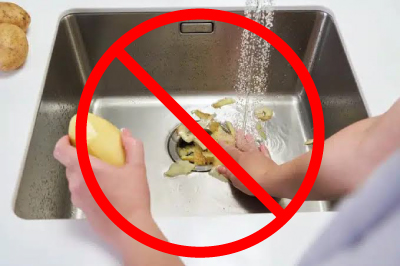
Potato peels, turkey scraps, gravy, and celery trimmings can create quite the cleanup pile. It’s tempting to send everything down the disposal and call it a day. But your disposal isn’t another dinner guest, and giving it a little of everything can leave you with a clog instead of a clean kitchen.
Never pour fats, oils, or grease down the sink.
Instead, let them cool in a suitable container such as a used can or jar, and put them in the trash. Wipe greasy pans with paper towels before washing them.
Lastly, don’t fall victim to the common misconception that running hot water from the faucet makes pouring grease down the drain a safe shortcut. It doesn’t.
You may have heard the day after Thanksgiving called “Brown Friday.” Consider that all the motivation you need to give your plumbing a little consideration during cleanup.
And if a drain is already slow, address it before guests arrive. An existing problem rarely becomes more convenient with twelve dinner plates waiting in the sink.
Make the Guest Bathroom Guest-Ready
A little bathroom preparation can save everyone an uncomfortable conversation.
Put a small trash can where guests can easily see it, stock extra toilet paper, and keep a plunger accessible. If you normally keep wipes near the toilet, consider putting them away for the gathering. Even products labeled “flushable” are best kept out of your plumbing system.
For overnight guests, make sure the bathroom exhaust fan works and encourage its use during and after showers.
These aren’t glamorous hosting details, but neither is asking where the plunger is during 4th quarter of the big game.
Plan the Plugs Before the Slow Cookers Arrive
The oven is full, so it’s time to bust out the slow cooker. Both of your aunts brought their own dishes and slow cookers as well. Another guest adds a warming tray. Then the coffee maker joins the party.
Before plugging everything in, think about where those appliances will run.
Follow each appliance’s instructions and use appropriate wall outlets. Don’t turn one outlet into a buffet station with a power strip and never connect power strips together.
Different outlets don’t necessarily mean different circuits.
Moving an appliance to the next receptacle on the wall may feel like a great plan to avoid overloading an outlet, but there is a good chance those outlets are on the same circuit. Consider setting up a sturdy serving table in a nearby dining or living room for the slow cookers.
Besides freeing up counter space, there’s a good chance outlets in another room are on a different circuit, helping spread out the electrical load.
Keep countertop appliances and their cords away from water and hot surfaces, and use GFCI-protected outlets in the kitchen. GFCI protection helps reduce shock risk; it doesn’t give a circuit more capacity.
If a breaker repeatedly trips, stop using that combination of appliances and have the issue checked. Repeatedly resetting it isn’t a solution.
Your Pre-Guest-Arrival Thanksgiving Checklist
Before the first guest arrives, take a quick lap around the house:
- Check the furnace filter and thermostat schedule
- Set the thermostat fan to ‘On’ or ‘Circulate’
- Clear furniture and other items away from vents and returns vents
- Turn on the kitchen exhaust fan when cooking.
- Plan showers around other hot-water use.
- Set out a container for cooled cooking grease.
- Stock the guest bathroom and make the trash can easy to find.
- Plan safe & strategic places to plug in appliances to avoid overloading a circuit
You don’t need a perfect house to host a great Thanksgiving. A few thoughtful checks can help keep the focus on the food, the company, and whether there’s enough pie for another slice.
Noticing a slow drain, unreliable heat, or an electrical issue before the holiday? Our heating, plumbing, and electrical teams can help you get it sorted before the house fills up.
Read more blog posts from Kettle Moraine Heating & AC.
About the Author
Josh Walejewski
Josh is a professional marketer who has worked in the HVAC industry since 2017. With a Bachelor of Applied Arts and Sciences Degree (B.A.A.S) in marketing and sustainable business management from the University of Wisconsin, he has a passion for all aspects of HVAC, business, marketing, and environmental stewardship.